
The Physics of Argument
On building the periodic table of discourse, turning rhetorical patterns into quantifiable, structural science.


NOTE: This is a conceptual opener. More of a manifesto, not a model. But we’re not staying abstract! In the very next post, we begin classifying real arguments, identifying structural components, and sketching the early periodic table of discourse. Think of this as the first step, from alchemy to structure.
If you’re someone who’s ever felt like modern discourse is broken not because people disagree, but because the disagreement itself is structurally invisible, this is for you.
We don’t currently have a shared language to describe the shape, strength, or behavior of arguments. We have rhetoric, logic, informal fallacies, and vibes. But when someone makes a claim, counters it, shifts frames, escalates tone, or collapses the topic, we have no agreed-upon system to say what just happened. It all plays out in a fog of impressions. Progress is slow. We say much and change little. We don’t walk, we spin.
That’s not how chemistry works. That’s not how weather modeling works. That’s not how software protocols work. And yet our conversations, the very thing that ultimately governs every domain of social behavior, remain structurally illegible.
We talk, get confused and tired, agree to disagree, and move on. We’re flying blind. But we no longer need to. We can now have a science of epistemic structure: a way to classify, track, and model the architecture of belief and argument in real time.
Think periodic table, but for the underlying patterns in the way ideas interact, spread, and clash.
It’s an emerging discipline, and it’s emerging here first. I see a science coming where arguments aren’t judged as good or bad based on content, but mapped by structure: coherence, volatility, propagation tendency, and stability under pressure. A tweet, a paragraph, a speech, a meme, all can be broken down into constituent epistemic molecules.
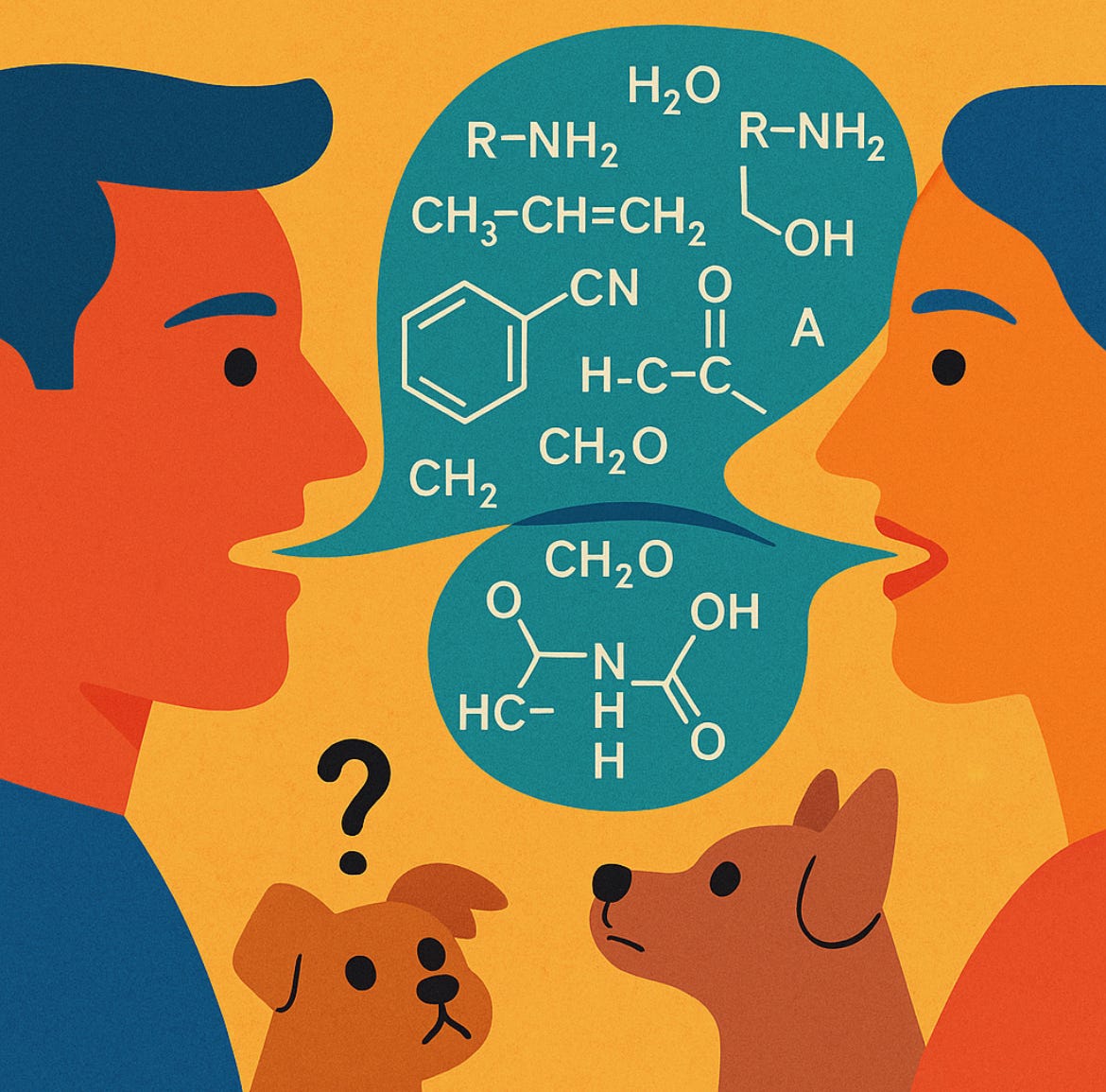
This isn’t bullshit. It’s engineering. Argument structures behave like reactive matter. They bond, repel, decay, explode, and stabilize depending on the environment. And they can be codified. For example, let’s say an “E6-type emotional absolute” might thrive in a high-fear, high-tribalism climate, while an “A2 logical scaffold” may require low-noise and high-attention environments to stabilize.
Just as we model weather with barometric pressure, humidity, and thermal gradients, we can model discourse, calculate and predict coherence pressure, emotional saturation, tribal velocity, and memetic friction.
Why do this? Not to enforce rationality. The point is to make visible the mechanics of belief construction. What structure is someone using? How does it behave? What are its tradeoffs? What happens to adjacent beliefs when it dominates?
Once that layer becomes visible, everything changes. You no longer debate blindly. You can audit, forecast, intervene. We can have objective nomenclatures for the types of things we say, think, and believe. We can use this power to shed light on the inner workings of our epistemic reality, and our thorniest and most stubborn gridlocks.
From this science, we can engineer new “belief compounds,” conceptual “alloys and polymers” that bind us together without calcifying into fanaticism. Beliefs that please the instrumentalists and metaphysical purists alike, because they are optimized to increase utility and coherence without falling apart.
We can build systems that support clarity, revision, cohesion, and resilience. That doesn’t start with better ideas. It starts with visible structure. We don’t need new answers. We need to name the moves.
We need something that merges logic, systems theory, memetics, behavioral economics, and symbolic structure into a living framework that treats argument forms as units of epistemic energy, with observable physics, chemistry, atmospherics, and decay cycles.
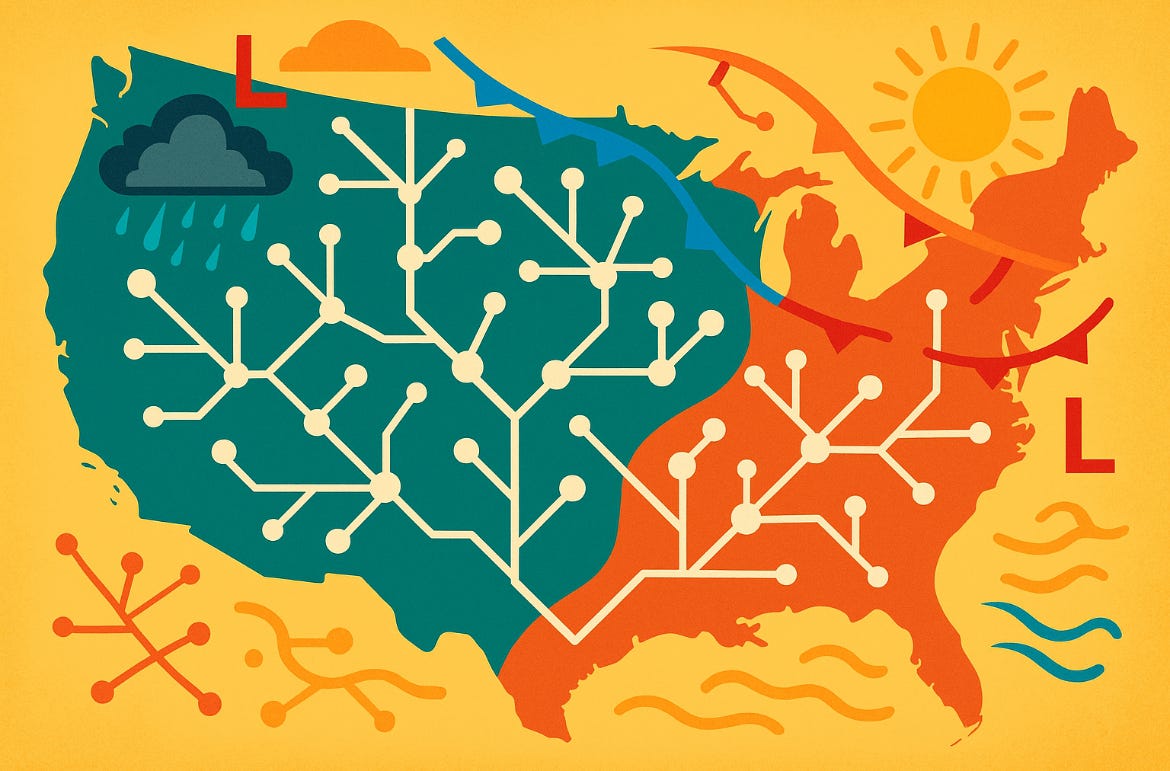
Imagine for a sec: argument structures as atomic forms. Each reducible to syllogistic patterns or logical templates. For example, ad hominem cloaked in moral appeal, recursive burden shifts, selective upstreaming. Think of them like “epistemic elements.”
Now imagine combinations, e.g., emotional proximity + adversarial framing, creating reactive compounds that trigger discourse collapse. Meanwhile, other forms produce glistening coherence, salience, and tribal allegiance. You get it, it’s chemistry, but with linguistic structures.
It also hints at literal meteorology, predicting how crowd sentiment will play out. Because argument structures don’t live in a vacuum. Conditions like audience fatigue, media saturation, and trauma proximity determine which forms propagate, which mutate, and which evaporate on contact.
There are real metrics to it. It’s kind of like economic indicators, but for “discourse health.”
Why do this? Because it could mean that the world will no longer run on nonsense, handwaving and vibes. What we say and think can be charted, mapped, and analyzed. And we can track when a certain structure is likely to dominate, fail, or metastasize.
Let me be clear: It’s not just about being right, whatever that means. If that’s all this was it’d be trivial. It’s about survival. Because currently, when damaging ideas scale through networks, or ideas collide in dangerous ways, our systems can’t even see the structures moving. This new science will change all that.
This is proto-science at the edge of epistemology and systems modeling. The emerging study of “argument-matter behavior” in a semi-chaotic semantic universe, giving rise to things like:
Epistemic molecules: functional compounds of premises, inferences, emotional tones, and semantic affordances.
Discourse thermodynamics: where cognitive load, tribal pressure, media velocity, and trauma saturation determine which structures live or die.
Epistemic climate vs. weather: long-term narrative trends vs. short-term virality. Both are trackable. And influenceable.
Rationality index, coherence pressure: how much truth-weight a structure can carry before breaking.
Argumentic inflation: where overused terms (e.g., “genocide,” “fascist”) lose epistemic value.
Many more. This is how clarity becomes infrastructure. The best part is, once we standardize the structural taxonomy, the rest is downhill. With a shared periodic table of argument forms, rules, coherence thresholds, deviation patterns, and interaction dynamics, we can:
Audit paragraphs, speeches and debates like spectroscopy for logic.
Simulate argument ecosystems and forecast breakdowns.
Believe things that make us happy without crossing over into unforgivable and unsustainable dumbness.
We humans use intricate language. We build movements on speech. But we still have no shared model of its structure. No naming convention. No map. That’s nuts.
It’s as if we were building skyscrapers without understanding tensile strength. Cooking without knowing boiling point.
We live inside a crisis of epistemic invisibility. It doesn’t have to be that way. Our arguments do have form. The form can be modeled, measured, mapped. Maybe even celebrated. This matters because arguments lead to beliefs, and beliefs make up the fabric of our shared reality. Our beliefs have viscosity, velocity, volatility. They are tribal, rational, emotional. Just like weather, they collide. Some explode. Some harmonize. It’s time we did more of the latter. Especially because we live in a time of nukes, AI, pandemics. We can’t afford to be sloppy and blind with our speech anymore.
Just as physics gave us flight, and chemistry gave us medicine, this new science of epistemic modeling will give us the clarity we need to help good ideas survive. Perhaps we’re not too late; maybe we can learn to coexist without collapse.
When the light goes on, it’ll be like anesthesia during an operation. Like fire in winter. Like seeing Saturn’s rings through a telescope. It’s a good thing. Humbling, inspiring, freeing. Someday we’ll have no idea how we lived without it.
Until then, our conversations will remain complex, volatile, consequential systems.
We’ve never bothered to map them in earnest. That ends now. Stay tuned for the next post: a proof of concept, with formal structures and actual examples. Meanwhile, let me know your thoughts.